Politics
Wike Cannot Dictate PDP’s 2027 Presidential Ambition, Says Prof Kila

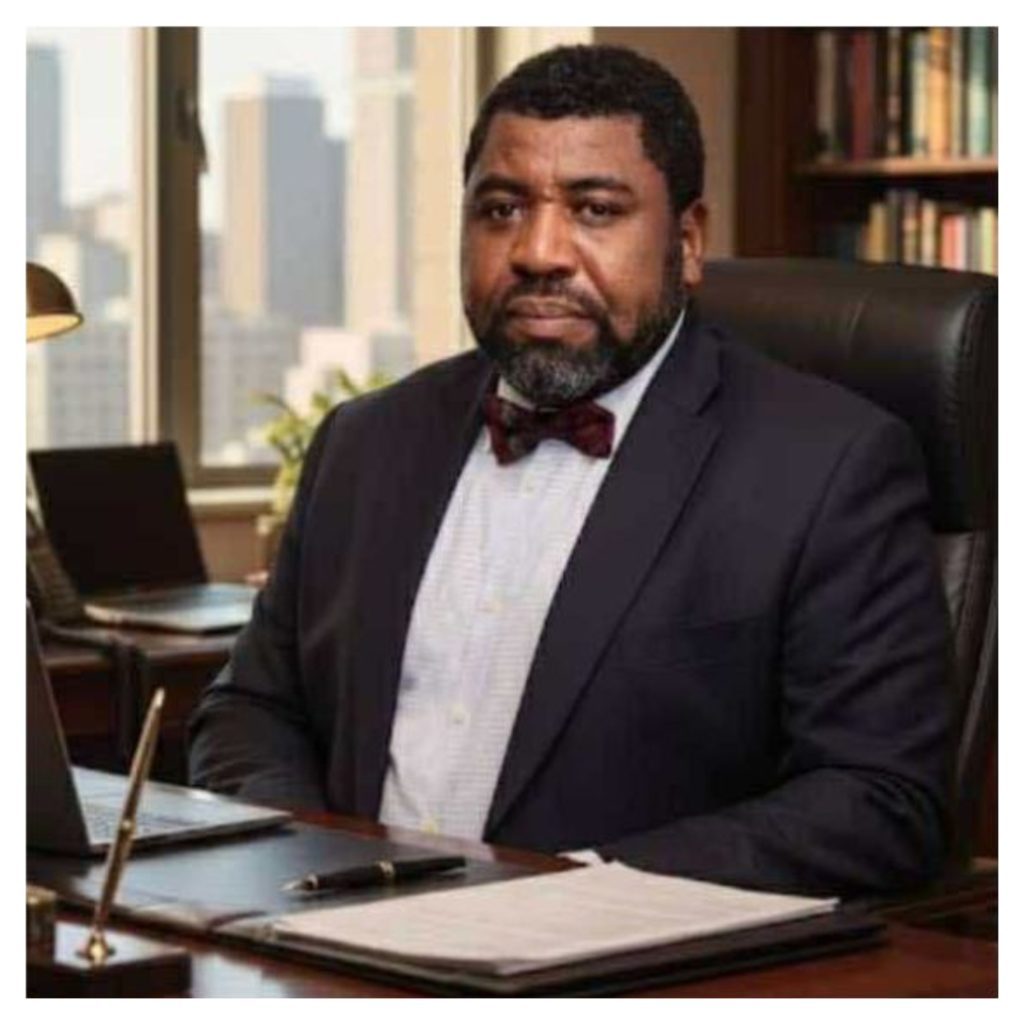
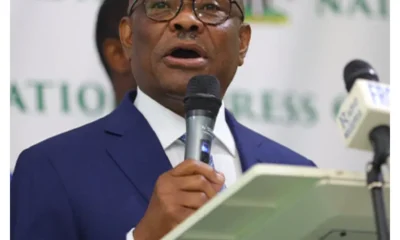
Professor Anthony Kila has weighed in on the intensifying political turmoil within the Peoples Democratic Party (PDP), asserting that while the Minister of the Federal Capital Territory (FCT), Nyesom Wike, is free to support a candidate from another political party, he fundamentally lacks the power to prevent the entire PDP from fielding its own presidential candidate in 2027. Kila’s comments follow a widely reported crisis and the violent clashes that recently erupted at the PDP National Secretariat on Tuesday.
The controversy stems from allegations that the former Rivers State governor presented a non-negotiable condition for achieving lasting peace within the main opposition party: that the PDP must agree not to field a candidate for the upcoming 2027 presidential election. This demand, viewed by many within the party as an attempt to hijack its core mandate, has become a flashpoint for internal discord.
Reacting to the chaotic events and the underlying struggle for control, Professor Kila, speaking on Arise News, stated that it is perfectly legitimate for the FCT Minister to pursue his own political interests. He suggested that Wike and his followers have already identified their preferred presidential candidate, a figure who currently resides outside the PDP. Kila questioned why this faction would then seek to dictate the choices of members who do not support their external candidate.
“In the PDP, there are people who are going different direction,” Kila observed. “Wike and those who follow him for any reason in the world, they have their candidate already who they want to be president.” He pointed out the apparent contradiction: “That candidate is not in the PDP. I do not know why they should now be interested in the people who don’t want that candidate now. I do not know why, but other people know why.”
Professor Kila emphasized the need for a legitimate and transparent process should Wike truly desire the PDP’s support for a non-party member, such as the incumbent President Bola Tinubu of the APC. He outlined a respectful and democratic approach that the Minister should adopt: “I believe that it is legitimate for Minister Wike to say that he wants his party to support an APC president, but the way to go about it, I believe, is to have a proper conversation on the table.”
He detailed what that formal, democratic conversation should entail: “To say, ‘dear party, my name is Wike. I would want President Tinubu of the APC to be president. Please, let us support him’, and if the party agrees, then they support him if they disagree that to be minority, a minority.” Kila’s analysis strongly suggests that Wike must respect the party’s decision-making process. While he is entitled to his personal political support, attempting to unilaterally impose a veto on the party’s fundamental right to nominate its own presidential flagbearer for the 2027 election is deemed an overreach, one that fuels the current internal crisis and undermines the principles of internal party democracy.
Would you like to know more about the recent clashes at the PDP National Secretariat? The analysis by Professor Anthony Kila, a renowned Jean Monnet Professor of Strategy and Development and Director at the Institute of the Commonwealth, provides a sharp critique of the ongoing power struggle within the Peoples Democratic Party (PDP). His comments, which focus on the alleged demand by FCT Minister Nyesom Wike that the PDP should not field a presidential candidate in 2027, emphasize the limits of any individual’s influence over the party’s fundamental democratic right to contest elections.
Kila’s assertion that Wike is entitled to support the candidate of his choice—even a member of the ruling All Progressives Congress (APC)—but cannot stop the PDP from contesting is rooted in the principle of internal party democracy. This principle, currently being strained by internal divisions, is vital to the legitimacy of any major political platform.
The turmoil to which Kila was reacting peaked with the violent clashes witnessed at the PDP National Secretariat (Wadata Plaza) in Abuja on Tuesday. The chaos stemmed from the scheduling of separate National Executive Committee (NEC) meetings by the party’s two rival factions: the bloc aligned with Wike and the newly elected National Working Committee (NWC) led by Kabiru Turaki.
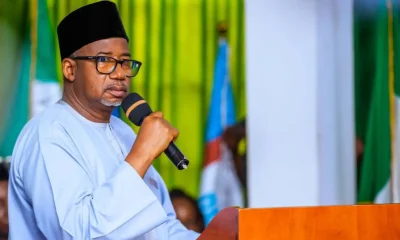
The confrontation turned physical as key figures, including Wike, Oyo State Governor Seyi Makinde, and Bauchi State Governor Bala Mohammed, attempted to access the secretariat. The melee escalated rapidly, with reports indicating that thugs from both camps clashed, forcing police to fire tear gas to disperse the crowd. Journalists were caught in the crossfire, with one reporter reportedly struck on the head and camera equipment destroyed, underscoring the severity and uncivil nature of the dispute. The entire complex was subsequently sealed off by armed police on Wednesday to prevent further violence.
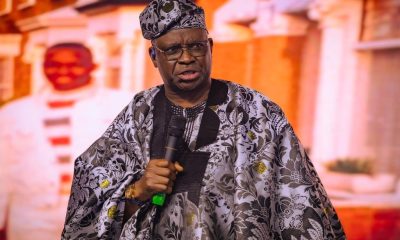
The underlying cause of this fight for control is the deep-seated rift following the party’s recent National Convention in Ibadan, which saw the expulsion of Wike, former Ekiti State Governor Ayo Fayose, and others for alleged anti-party activities. Wike’s faction retaliated by rejecting the expulsion and, in turn, moving to expel other leaders, further deepening the legal and political crisis.
Kila’s comments serve as a rebuke to the entire political elite involved in the power struggle, which he described as a “show of shame” that reflects a systemic dysfunction within Nigerian political parties. He warned that the conduct—deploying “thugs, shouting, shoving, and resorting to expelling and fighting one another”—shows a failure to uphold civility and democratic norms, confirming his long-held suspicion that “too many of the people ruling us, aspiring to rule us, are not worthy of being called statesmen or leaders.” His ultimate conclusion remains that the PDP, despite its internal divisions, must hold a proper, democratic conversation before attempting to make a decision as fundamental as relinquishing its right to field a presidential candidate.