World News
Trump Claims Loss of Support Forced Greene’s Resignation


Former President Donald Trump has offered a blunt assessment of the abrupt resignation of Congresswoman Marjorie Taylor Greene (R-Georgia), asserting that her departure was a calculated move to avoid an unwinnable primary election after she lost his crucial political backing.
The resignation of Rep. Greene, which was announced on Friday, followed a period of intense public disagreement and marked the climax of her political clash with both the former President and the Republican establishment. The feud intensified after Greene maintained a hardline stance during the nation’s longest government shutdown, followed by her controversial alignment with Democrats on a vote concerning the release of the Epstein files.
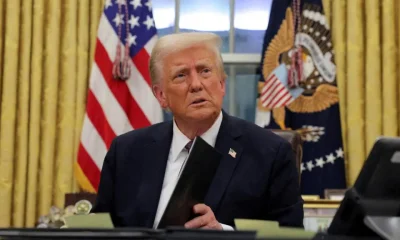
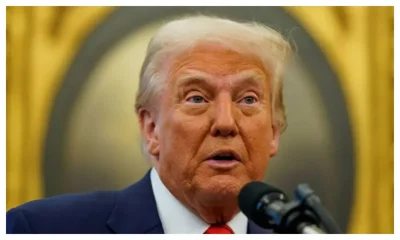
Reacting to the news, Trump claimed that the Congresswoman would not have stood a chance of political survival without his endorsement. “Once I left her, she resigned because she never would have survived a primary. But I think she’s a nice person,” Trump said, attributing her political decision entirely to the withdrawal of his powerful support.
Trump’s statement directly contradicts Greene’s own rationale, in which she cited her opposition to the Republican leadership’s failure to address crucial healthcare issues and her frustration with the perceived political drama and legislative inaction in Washington. Her statement had also accused the Republican establishment of hypocrisy and criticized the party’s readiness to welcome back those who had previously betrayed Trump.
Despite the political acrimony that had culminated in his public branding of Greene as a “traitor,” “ranting lunatic,” and a “disgrace” to the party, the former President concluded his comment by offering a somewhat softening personal appraisal: “But I think she’s a nice person.” Trump’s immediate claim of responsibility for her resignation underscores the prevailing influence of his political endorsement within the Republican base and suggests that Greene calculated the political risk of running for re-election without it was too high.