NEWS
Sani Fires Back at El-Rufai Over Bandit Allegations

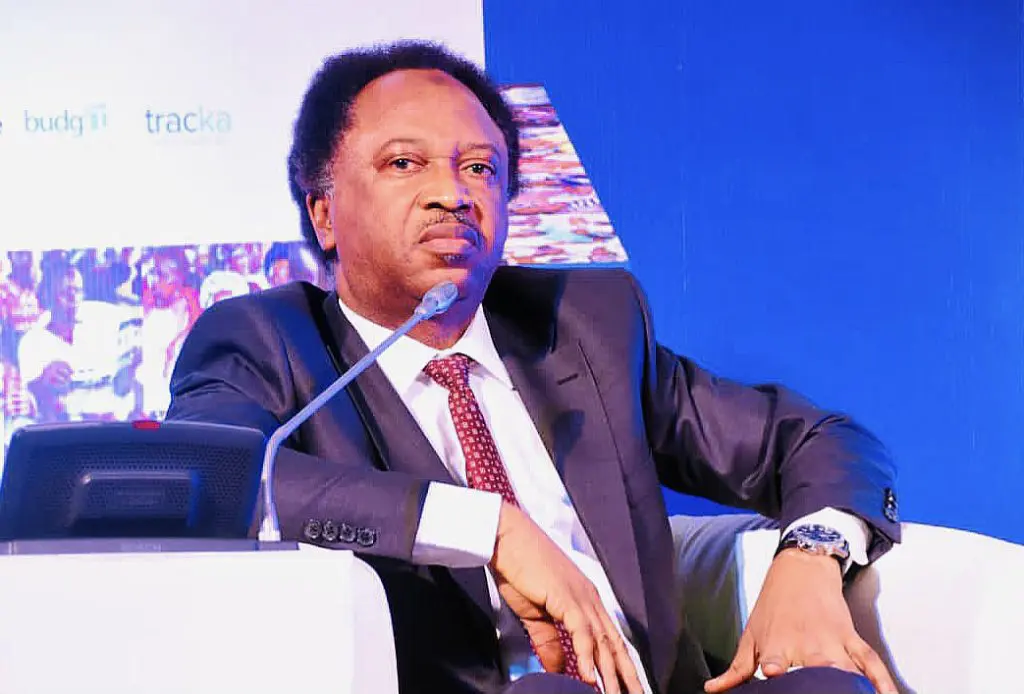
A searing political feud has erupted in Kaduna State, pitting former Senator Shehu Sani against his long-time rival, ex-Governor Nasir El-Rufai, over grave allegations regarding the funding of criminal elements. Senator Sani has forcefully dismissed El-Rufai’s recent claim that the current Kaduna State Government, under Governor Uba Sani, paid N1 billion to bandits, labeling the assertion as “false and ridiculous.” In a strongly-worded public statement, the former Kaduna Central representative accused the ex-governor of propagating “politically motivated falsehood” designed to undermine the current administration.
Senator Sani’s counter-attack was not limited to denying the N1 billion claim; it pivoted sharply to accuse El-Rufai of actively promoting a “culture of appeasement to terrorists” during his own tenure. He recalled that the former governor had previously admitted to engaging in “conditional cash transfers” to bandits, a controversial move that, Sani noted, even led to the arrest of journalist Luka Biniyat at the time for questioning the policy. By linking El-Rufai’s own past actions to the current controversy, Sani sought to undermine the moral authority of the accuser.
The former lawmaker then catalogued a devastating list of security failures that occurred under El-Rufai’s watch, arguing that Kaduna State experienced some of its most profound security crises during that period. He cited several high-profile and traumatic incidents that captured national attention, including the catastrophic Kaduna–Abuja train attack, the mass abduction of students from Greenfield University, and the kidnapping and subsequent killing of students from the Federal College of Forestry Mechanisation and Bethel Baptist High School, among others. “Under his watch, bandits and terrorists operated freely like lords and kings,” Sani asserted, painting a picture of systemic breakdown where large swathes of Southern and Central Kaduna became “slaughter houses where criminals operated unchallenged.” The situation was so dire, he recalled, that even critical infrastructure was affected, noting that the Kaduna airport was temporarily shut down due to escalating insecurity, a clear indication of the terrorists’ reach.
To further discredit El-Rufai’s current claims of security competence, Sani referenced the former governor’s decision to withdraw his own son from a public school due to safety concerns. This action, Sani argued, spoke volumes about the reality of insecurity under the ex-governor’s administration, standing in stark contrast to his present claims and criticisms. The former senator then threw down a gauntlet, challenging El-Rufai to substantiate his billion-naira allegation with concrete proof. “If he has images or videos showing cash being handed to bandits, he should make them public,” Sani dared, insisting that mere accusations without evidence hold no weight.
The statement then escalated the political nature of the dispute, alleging that El-Rufai’s motivations are not rooted in genuine concern for security but are driven by personal “envy.” This envy, Sani claimed, stems from what he described as Governor Uba Sani’s notable success in fostering unity and bridging the historical divide between the predominantly Christian Southern Kaduna and the Muslim-majority Northern Kaduna. Sani explicitly accused El-Rufai of presiding over an era marked by deep “religious and ethnic discrimination, division, persecution, torment and terror,” suggesting that the current governor’s efforts to build bridges are seen as a threat to the political legacy of division allegedly cultivated by his predecessor.
While Senator Sani acknowledged the enduring security challenges that continue to plague Kaduna, a reality shared with other northern states, he vehemently argued that Governor Uba Sani has made significant and commendable progress. This progress, he stated, is not only visible in the “building bridges across religious divides” but also in “dismantling the structures of banditry allegedly inherited from his predecessor.” In a sweeping final dismissal, Sani questioned the credibility of his rival, concluding that “No sensible or responsible person conscious of history will give credence to the stream of lies that have become habitual in the life of a man in his mid-60s.” The explosive exchange lays bare the deep animosity between the two political figures and ensures that the contentious politics of security and ethno-religious unity will dominate the discourse in Kaduna State for the foreseeable future.