
NEWS
Media Coalitions Threaten Exposure of Fuel Import Cartel

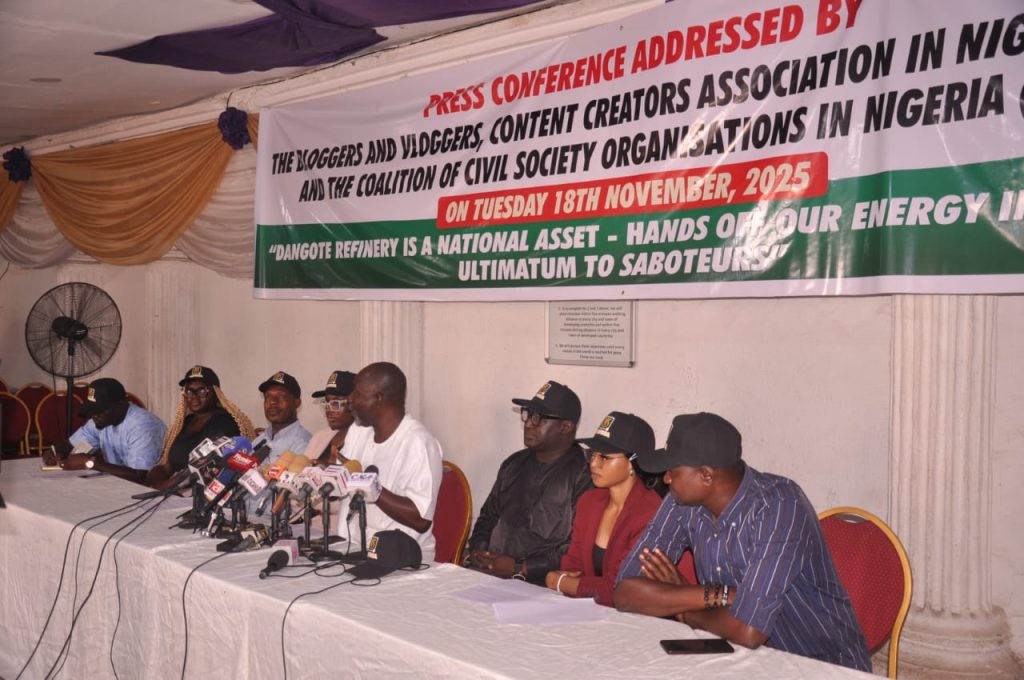
A powerful coalition of Nigerian media creators and civil society groups has issued a sharp ultimatum, threatening to publicly expose a shadowy network of individuals and entities accused of sabotaging the nation’s economy by perpetuating the reliance on fuel importation. The groups described this alleged network as a small but highly influential “economic cartel” determined to drag Nigeria back into a cycle of artificial scarcity and perpetual poverty for private gain.
The warning from the alliance, operating under the banners of The Bloggers and Vloggers, Content Creators Association in Nigeria (BAVCCA) and the Coalition of Civil Society Organisations in Nigeria (COCSON), was delivered at an emergency press conference held in Abuja on Tuesday. This decisive action was triggered by the Federal Government’s recent suspension of the implementation of a 15% import duty on petrol, a policy reversal that the coalition views not as relief, but as a victory for the alleged saboteurs.
The coalition launched a blistering attack, directly accusing fuel importers, oil traders, and their supposed collaborators operating within government institutions of orchestrating a coordinated, deliberate attack against the country’s nascent local refining capacity. Key elements of this campaign, according to the groups, include the deliberate dissemination of “false statistics” and the forceful promotion of policies that exclusively favor costly and unnecessary fuel importation.
In a striking claim, BAVCCA and COCSON asserted that Nigeria currently possesses more than enough locally refined fuel to meet the domestic demand of every car, truck, generator, and factory in the country. They argued passionately that continued petrol importation is no longer a genuine necessity, but rather a cynical choice insisted upon by a few who profit handsomely from what they termed Nigeria’s “collective suffering.”
Their criticism of the federal government’s decision to suspend the import duty was equally fierce. They branded the policy reversal as “sabotage disguised as relief,” arguing that artificially removing the duty makes imported fuel cheaper, thereby creating an unfair and unsustainable advantage that directly undermines the financial viability of both major domestic refineries and smaller modular refineries that are striving to produce locally. The coalition posed a rhetorical but pointed question to the government: “Why are we subsidizing foreign refineries in Europe and America with Nigerian crude and foreign exchange, when our own refinery is producing surplus at competitive prices?”
The coalition has given a strict deadline to the importers, marketers, and their alleged government collaborators to cease all “negative propaganda” and lobbying efforts that encourage the continuation of fuel importation. The ultimatum expires at 12:01 a.m. on Tuesday, November 25, 2025. Should their demand not be met, the groups vowed to launch a phased naming and shaming campaign of unprecedented scale.
The campaign, they warned, will be meticulous and comprehensive. “We will release names, photographs, companies, bank records where necessary, and documented evidence of individuals and entities involved, no matter how highly placed,” the statement read, promising to leave no alleged conspirator protected. The coalition also directed a specific warning toward those within government circles, stating that President Bola Ahmed Tinubu has demonstrated a clear commitment to positively impacting the lives of Nigerians and maintains “zero tolerance for corruption and sabotage.”
The groups confirmed that they have already submitted detailed petitions to multiple critical government agencies, including the Presidency, the Economic and Financial Crimes Commission (EFCC), the Independent Corrupt Practices and Other Related Offences Commission (ICPC), the Department of State Services (DSS), and the National Assembly. They are demanding an immediate investigation into this alleged conspiracy, with the ultimate goal being the removal and prosecution of all those found culpable, who must then “face the full wrath of the law.” This aggressive stance by the civil society and media creators marks a critical escalation in the public battle over Nigeria’s petroleum sector and signals an attempt to shift the focus from policy debates to individual accountability.