BUSINESS
Dangote Refinery: We Don’t Make Winter Diesel

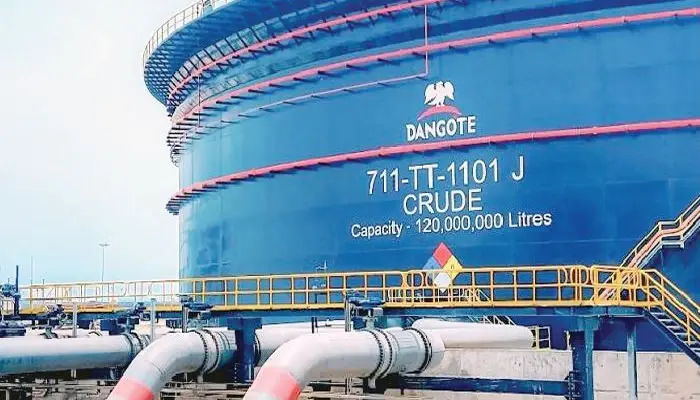
The Dangote Refinery has responded to allegations from European buyers that its diesel product is being shunned over failure to meet the continent’s winter specifications and for containing higher than standard sulfur levels. The refinery firmly stated that the product being referenced is not part of its current production portfolio.
The denial follows a report published by Argus Media and widely circulated on platforms like Oilprice.com. The report suggested that European petroleum buyers and importers are deliberately avoiding Dangote diesel shipments due to its inability to cope with cold weather conditions.
One Nigerian source quoted in the media report acknowledged the technical limitation, stating: “Dangote can’t supply winter diesel, at present, to the colder regions [of Europe].” The report generated considerable discussion and concern across the global energy sector over the past twenty-four hours.
However, reacting to the controversy, the spokesperson of the Dangote Group, Anthony Chiejina, dismissed the quality concerns as misleading, clarifying that the 650,000-barrel-per-day refinery does not currently produce a winter-grade diesel product.
“Winter Diesel is not in our portfolio,” Chiejina stated. He explained that the refinery’s focus is on the domestic and African markets, which do not require cold-weather fuel specifications. “We don’t need winter spec. We are a tropical country,” he asserted.
It is important to note the contrast with previous statements. The Dangote Group, in a 2024 release quoting Devakumar Edwin, the Vice President of Oil and Gas, had announced that the refinery had exported ninety percent of its jet fuel and diesel output to Europe, establishing a significant early presence in that market.
Experts note that European winter diesel typically requires a cold filter plugging point (CFPP) well below freezing, sometimes as low as −7
∘
C to −12
∘
C, to prevent the fuel from gelling in cold weather. Furthermore, the European standard for diesel sulfur content is a maximum of 10 parts per million (ppm).
Earlier tests cited by market sources for a Dangote sample reportedly showed a cloud point of +8
∘
C and a sulfur content of 36ppm, both figures falling outside strict European winter specifications, though the sulfur level is lower than the majority of fuel previously imported into Nigeria. The refinery has indicated plans to eventually upgrade its fuels to Euro VI standards, which include 10ppm sulfur, by 2028.