NEWS
ASUU Warns of Imminent Strike, Blames Government’s “Wicked” Will for Stalled Talks

The Academic Staff Union of Universities (ASUU) has issued a dire warning to the Federal Government, asserting that the nation’s public universities face another imminent paralysis due to the government’s blatant lack of political will to resolve the long-standing 2009 agreements. Speaking at a press conference in Benin City, the leadership of the Benin Zone of ASUU dismissed arguments of economic hardship, stating that the government’s excuses for denying adequate funding to the education sector are no longer tenable.
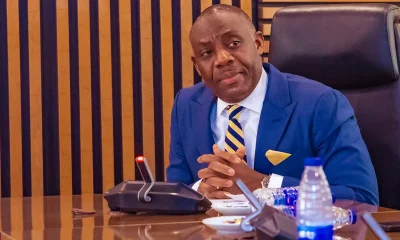
Professor Monday Lewis Igbafen, the Zonal Coordinator, who addressed the press, strongly refuted the government’s “sing song” about the paucity of funds or the global economic downturn, arguing that these are mere excuses used to deny the education sector its required resources. He urged the government to demonstrate seriousness and decisively conclude the renegotiation of the 2009 FGN/ASUU Agreement and genuinely tackle the other crucial ancillary issues that remain in contention.
The press conference, dramatically titled, “Time is running out! We cannot continue in an endless negotiation/renegotiation! Hold the Government responsible for another imminent round of paralysis in Nigeria’s public universities,” highlighted the Union’s growing frustration. Professor Igbafen reminded the public of the recent two-week warning strike, which was suspended following the intervention of critical stakeholders, including students, parents, the media, the Nigeria Labour Congress, and other well-meaning citizens. He explained that the National Executive Council of ASUU, in its emergency meeting on October 21, 2025, resolved to suspend the strike to reciprocate the overwhelming public support the union received.
The Union believed the subsequent one-month window was more than enough time for the government to conclude the renegotiation that has dragged on for several years. However, the zonal coordinator expressed deep regret and sadness that the Federal Government has, yet again, demonstrated a blatant unwillingness to quickly and holistically resolve all the outstanding issues necessary to restore industrial harmony in the nation’s public universities. According to ASUU, successfully resolving the 2009 agreements is the key to ensuring stability in the sector, which is ultimately in the overall interest of Nigerian students.
While acknowledging that some progress has been made in closing gaps on some non-monetary aspects of the Agreement, Professor Igbafen stressed that the salary and conditions of service components remain the most critical and unresolved issue. He confirmed that the union has outright rejected the government’s proposed salary increment, labelling it a “mere drop in the ocean.” ASUU views the proposal as utterly incapable of achieving the necessary reversal of the rampant brain drain syndrome currently devastating university education in Nigeria, where talented scholars are leaving the country in droves for better compensation abroad.
Professor Igbafen declared that the union is fed up with the government’s “back-and-forth approach” to the negotiation, insisting that this “half-hearted approach must stop now.” He presented a chilling economic reality: university teachers in Nigeria have been forced to remain on the same salary regime established in 2009, a time when the value of the Naira to the US Dollar stood at approximately N120. This stagnation has persisted for over 15 years, even as salaries in other sectors of the economy have been reviewed upward twice or more. The zonal coordinator lamented the “scandalous under-valuation” of Nigerian scholars, noting that a professor at the highest salary bar earns less than $400 per month in today’s economy. He described the government’s refusal to implement a meaningful review for over a decade and a half as not only “wicked and inhuman” but also a direct catalyst for resistance, industrial disharmony, and the severe brain drain plaguing the system.
Further escalating the rhetoric, Professor Igbafen accused Government functionaries, including the Minister of Education, of making actions and pronouncements that are “antithetical” to a genuine and speedy resolution of the issues. He alleged that the government is deliberately undermining the negotiation process through subtle misrepresentations of both the issues and the agreements reached, including the so-called government offers and their implementation. Specifically, he cited issues related to the part-payment of promotion arrears dating as far back as 2017 and the release of third-party deductions—both of which represent years of unpaid benefits owed to members. The union accused the government of wickedly portraying these actions, which should be considered mere “confidence-boosting exercises,” as the core or substantial issues of the negotiation process, thereby distracting from the main demands. The former ASUU chairman of Edo State University, Ekpoma, concluded by declaring that the Benin Zone, mirroring the position of other zones nationwide, is fully prepared for the directive of the National Executive Council (NEC) to resume the suspended strike action once the one-month window expires without a satisfactory resolution. The fate of public university education now hangs precariously on the Federal Government’s immediate willingness to commit to a sincere and final settlement.