Politics
Wike Praises Tinubu, Says Rivers is Saved and Restored

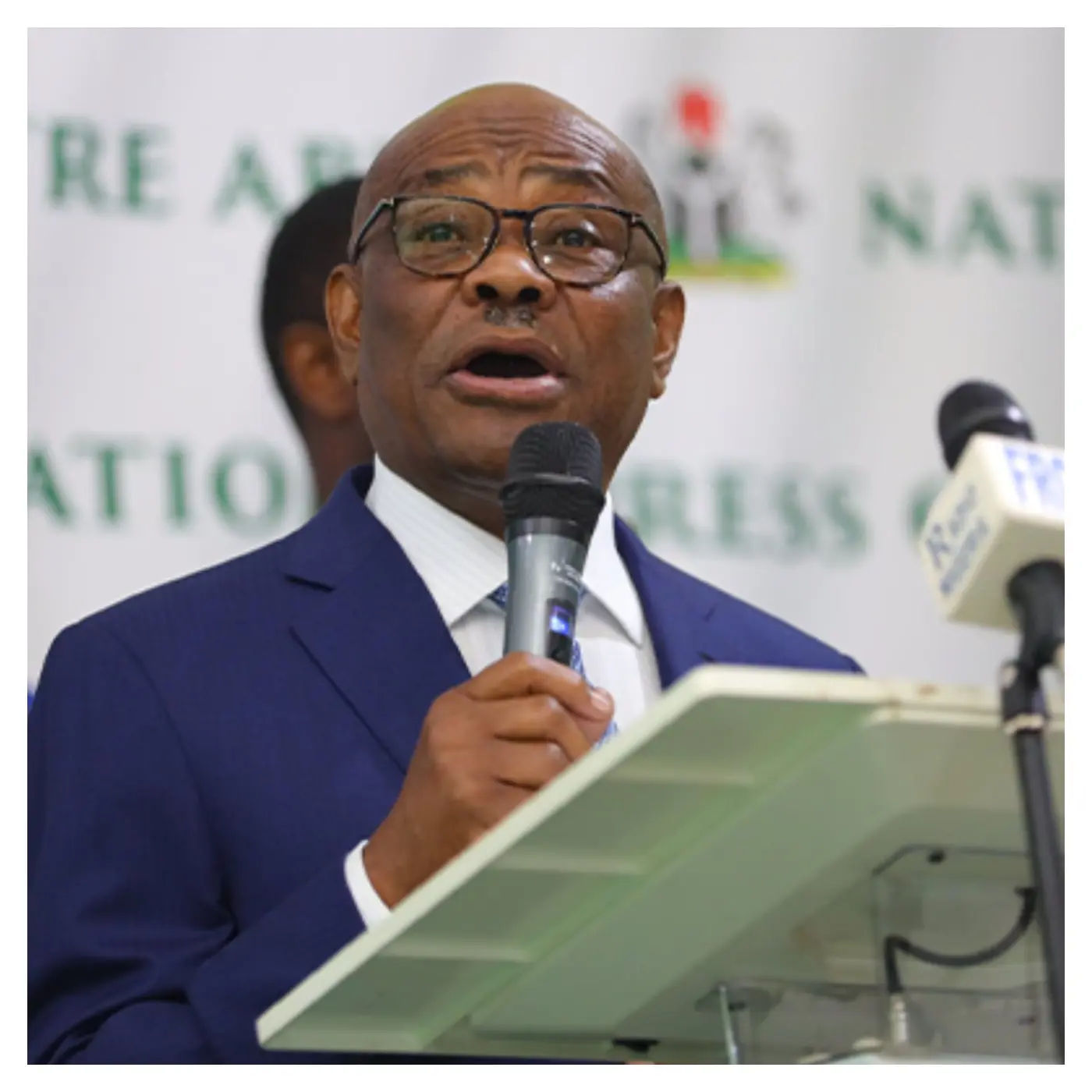
The Minister of the Federal Capital Territory (FCT) and former Governor of Rivers State, Nyesom Wike, has lauded President Bola Ahmed Tinubu for his decision to lift the state of emergency in Rivers State. In a statement released on Wednesday by his Senior Special Assistant on Public Communications and Social Media, Lere Olayinka, Wike described the President’s action as a move that “restored democracy” and “saved the state from crisis.” His remarks come just hours after the six-month emergency rule, which suspended the Governor and elected lawmakers, was brought to an end, paving the way for the full restoration of democratic governance. While Wike’s comments signal a newfound sense of peace, they are a powerful reminder of the intricate and often volatile power dynamics that led to a crisis of constitutional magnitude in the oil-rich state in the first place.
Wike’s praise for the President’s swift intervention is a pivotal moment, as his role in the crisis is well-documented. The state of emergency was a direct consequence of a bitter and protracted political feud between Wike and his successor, Governor Siminalayi Fubara. The power struggle, which began shortly after Fubara’s inauguration, quickly escalated, leading to the demolition of the Rivers State House of Assembly complex and the fragmentation of the legislature into opposing factions. The crisis reached a crescendo when President Tinubu declared the state of emergency on March 18, citing a complete breakdown of governance, an inability of the executive and legislative arms to work together, and a threat to national security from rising militant activities and pipeline vandalism. The President’s proclamation, a rare move in Nigeria’s democratic history, suspended the offices of the Governor, his deputy, and all elected lawmakers, and appointed a Sole Administrator to manage the state’s affairs. The Supreme Court had, in a prior judgment, observed that due to the political impasse, there was effectively “no government in Rivers State,” a pronouncement that Tinubu referenced in his address to the nation.
In his statement, Wike expressed his profound gratitude to President Tinubu, saying his “proactive action saved Rivers State and restored the confidence of the people in his leadership.” This sentiment, while publicly shared by many, also draws attention to the complex and often ironic nature of Nigerian politics. Wike, as the political “godfather” to Governor Fubara, was widely seen as a central figure in the feud that brought the state to a standstill. His public feud with Fubara, a man he had handpicked as his successor, was the primary catalyst for the constitutional crisis. Therefore, his current praise for the President for restoring the very democracy he was accused of undermining is a testament to the shifting political alliances and the high-stakes game being played at the highest levels of power. The lifting of the emergency rule is, in many ways, the culmination of a fragile peace deal brokered by President Tinubu himself, which reportedly included concessions from both sides. This arrangement is rumored to have been a key factor in resolving the standoff, even as critics have warned that it may not be a long-term solution.
As the state moves forward, Wike’s call for harmony among stakeholders carries significant weight. With the Governor and lawmakers now reinstated, the immense challenge of rebuilding a functional government lies ahead. The immediate task will be to pass the state’s budget and address the critical issues that were left unaddressed during the six-month hiatus. Wike’s statement, and his call for stakeholders to work “harmoniously for the collective interest of the state,” can be interpreted as a strong signal to all political actors that the time for confrontation is over. He has also warned against any attempts to “stir trouble,” a warning that is directed at any faction that might be opposed to the new political order. The people of Rivers have a collective hope that the fragile truce will hold, allowing for a sustained period of peace, progress, and development. The path ahead will not be easy, as the deep political scars from the past months will take time to heal. However, with the formal end of the state of emergency, a new chapter has officially begun, and the focus, as Wike has promised, can now shift from political turmoil to governance and development.